 ConnectOnion
ConnectOnion 1.9.1 (stable)
Install
python -m pip install --upgrade 'connectonion==1.9.1'
co rem init
A first run that investigates
1.9.0 wrote every mapped page once. 1.9.1 investigates each one the way a reporter would and keeps building on what it found.
- Investigate, then deepen. The first pass reads the last 180 days of mail, sixteen pages at a time. While it runs, a background thread fetches up to two years of mail for every person; each person with older material is then investigated again on top of the page already written.
- Rounds instead of a skim. Evidence too large for one turn is read oldest first in rounds, each editing the page and passing its open leads to the next, then a final synthesis keeps every thread and searches for missing outcomes.
- Edit in place. Every investigation edits the existing page instead of rewriting it, so earlier findings survive. A turn with nothing new ends with NO CHANGE and skips review.
- Decisions and principles. Init ends by drawing decisions and principles from the pages it just wrote.
- Organisations read their website, and a page cites the PDFs and other attachments it relies on.
Reading a page
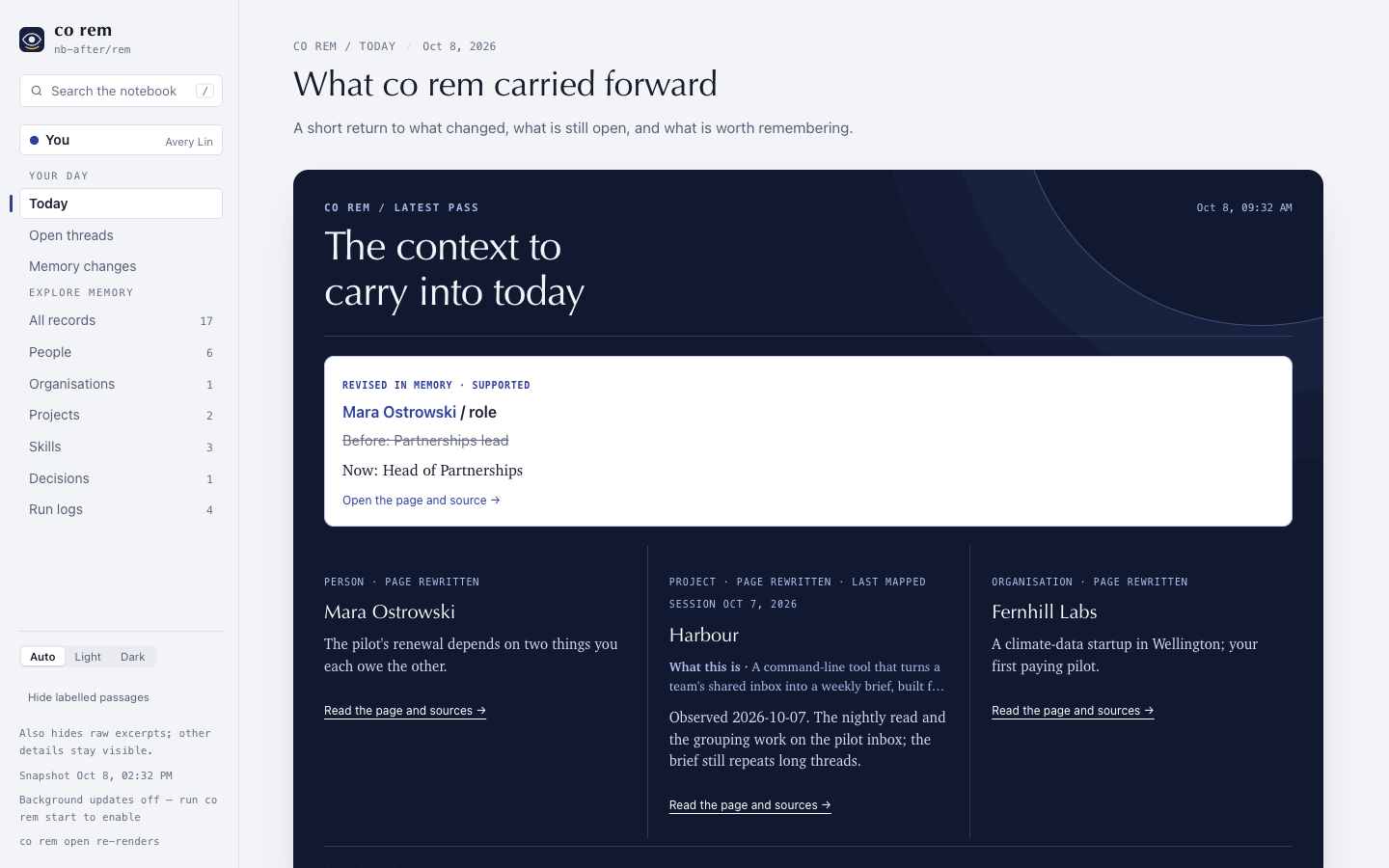
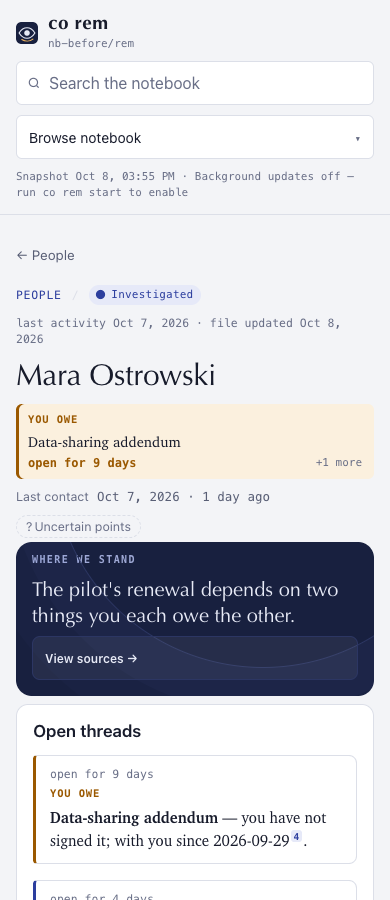
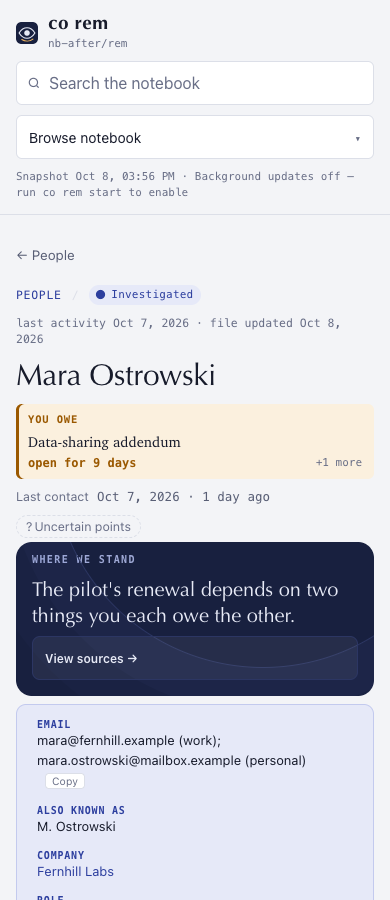
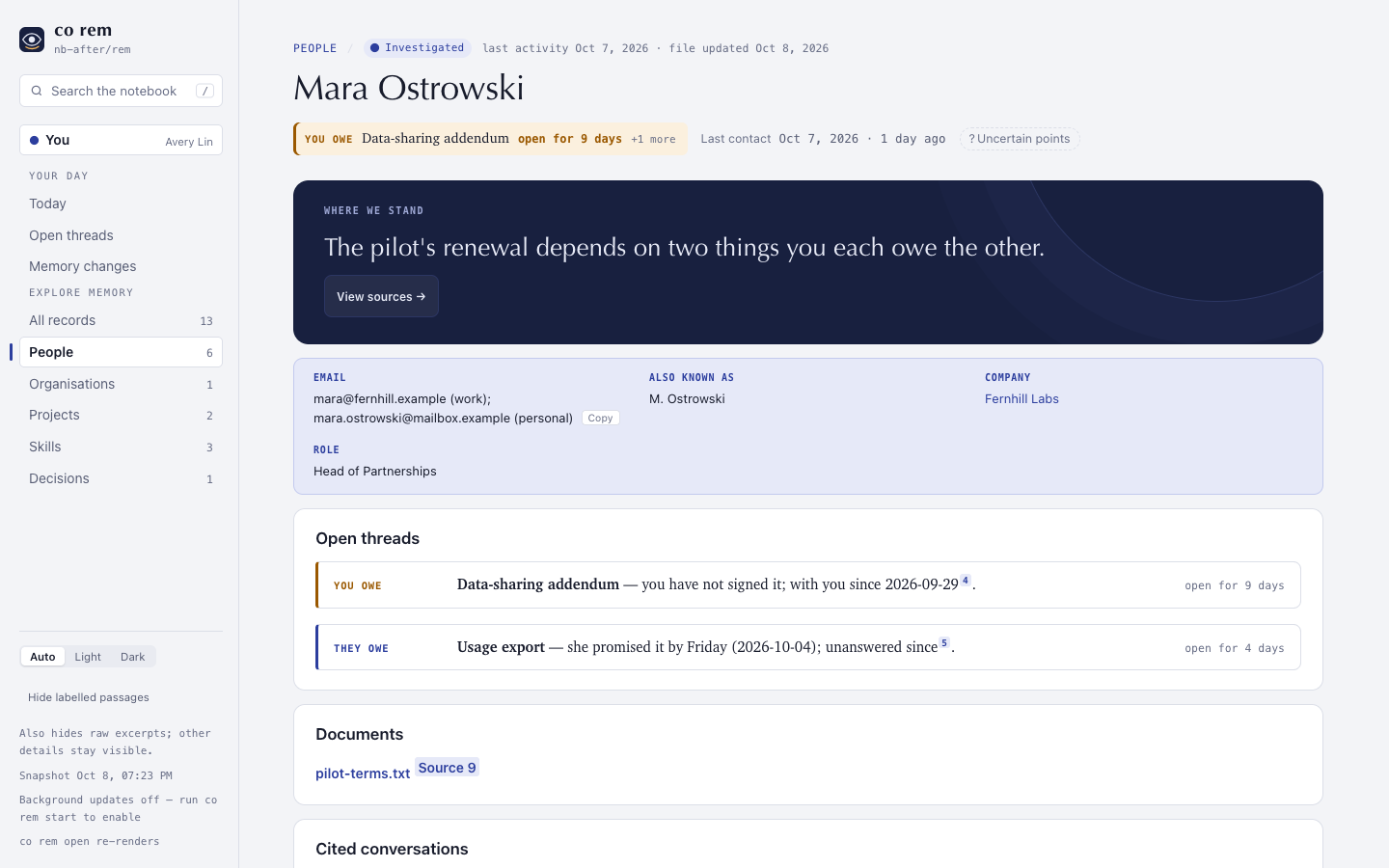
- A Person page opens with email, phone, other names, company (with what it does) and role, each copyable.
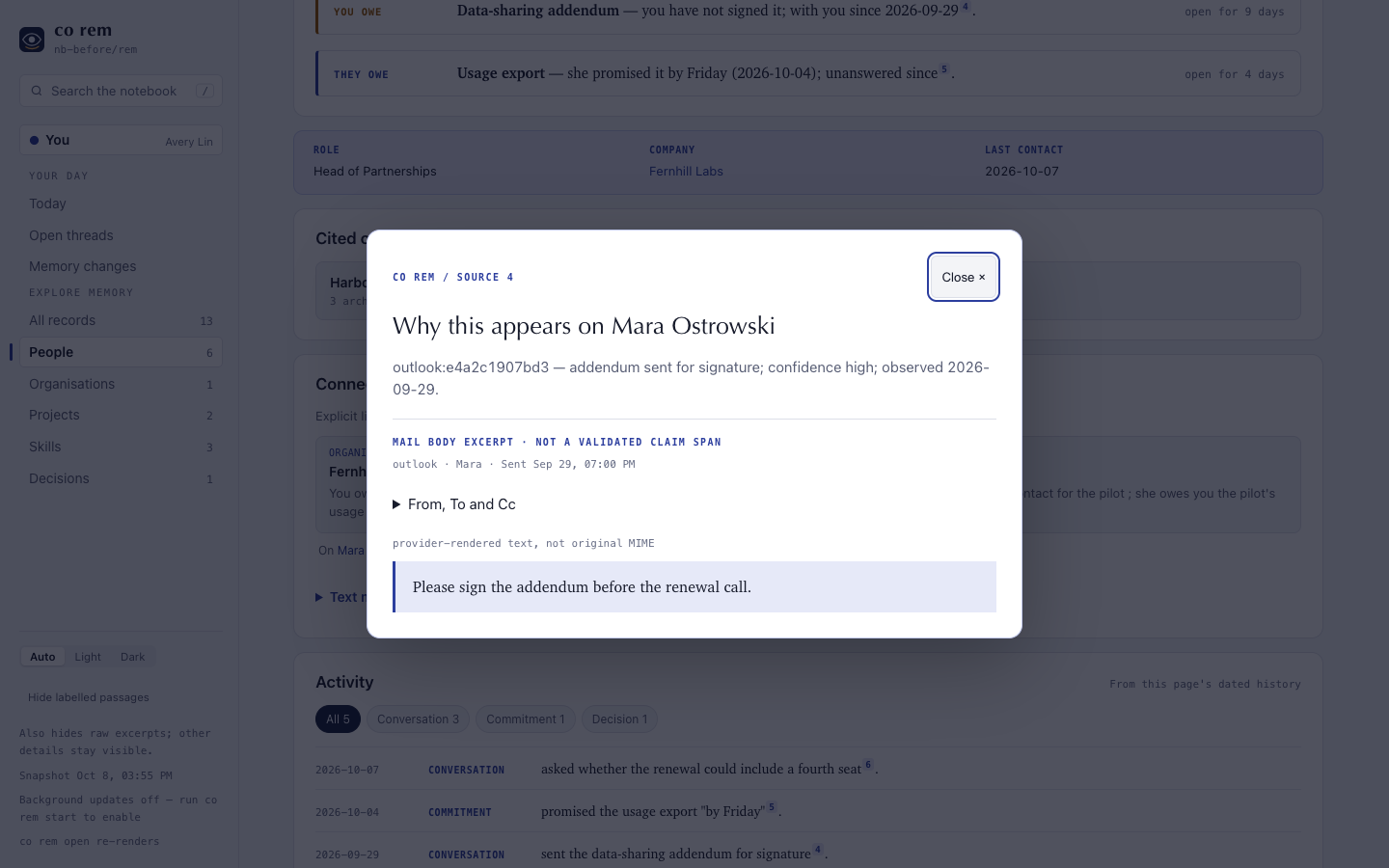
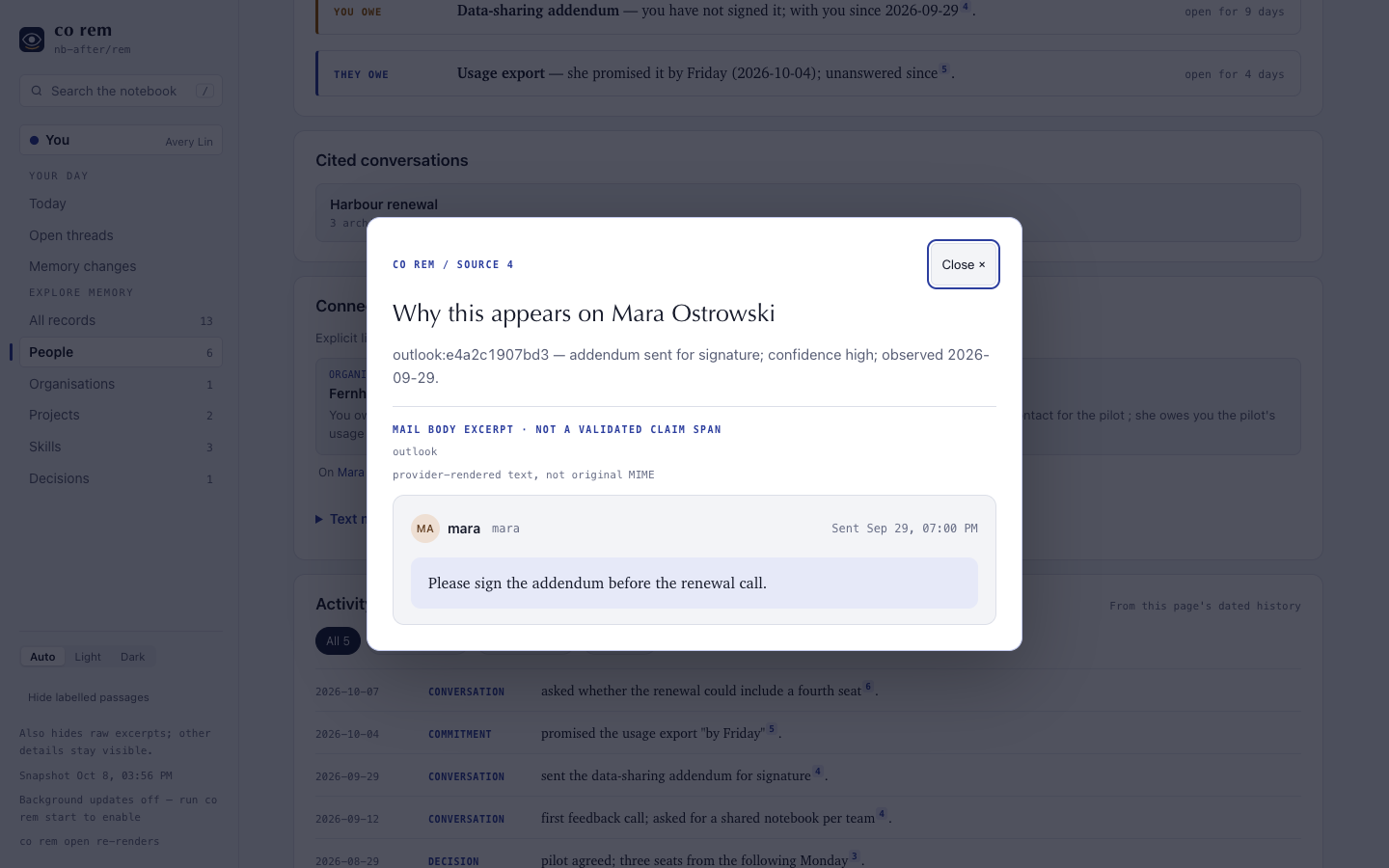
- A cited mail opens as a message: sender, address, time, recipients and CC with avatars, then the body.
- A page lists the documents it cites; each opens from the page.
- Generated maps and skill run reports moved from Notes to Run logs, so Notes is left for the AI's own notes. Existing notebooks are moved on upgrade.
Screenshots use invented contacts: Run logs, Person phone, before and after, cited mail, before and after, Documents. The screenshot manifest records their origins.
Faster on a large mailbox
- Coding sessions are scanned once per run instead of once per person.
- Mail bodies already kept are read from disk; attachment lookups are cached.
- Gmail and Outlook fetch with their own concurrency, and a provider's rate-limit answer is retried with back-off.
- Saving finished work waits up to ten minutes for the notebook lock and a token refresh two minutes for the credential file, long enough for sixteen workers and a background backfill.
Real trial
The public 1.9.1rc1 wheel ran a full 180-day first run on the owner's real Gmail and Outlook (4,523 messages) with Codex and gpt-6-luna:
| 1.9.0 (90 days) | 1.9.1b5 | 1.9.1rc1 | |
|---|---|---|---|
| Whole run | 83 min | 145 min | 133 min |
| API-equivalent cost | US$3.75 | US$11.19 | US$12.54 |
| People deepened with older mail | none | 55 | 57 (1,261 older items) |
| People / projects / organisations / skills written | 68 of 70 / 6 of 17 / 18 / 147 of 148 | 84 / 19 of 20 / 25 of 27 / 146 of 148 | 83 of 84 / 18 of 20 / 26 of 27 / 146 of 148 |
| Investigations that did not land | — | 6 of 336 | 6 of 338 |
| Lock-wait failures | — | 2 | 0 |
| Decisions / principles | none | 5 / 1 | 5 / 0 |
Of rc1's six, five were pages the review refused (unresolved citations or a
missing fact field; the candidate is kept and co rem investigate <page> --retry-refused retries it) and one was a network read timeout. Counts are
aggregate; private names and source text are not published.
Known limits
- When any page is left unfinished, init's closing summary is prefixed with an
empty
Error:line; theNext:line names the page to retry. - A network read timeout outside the provider retry fails that page.
- Daily scheduling still requires macOS.